For the blog this week, I’m going to put on my rose tinted glasses and reminisce about the simplicity of childhood. One phrase that keeps knocking around my head when I think about being a kid: ignorance is bliss.
It’s tempting – especially when you’re going through a particularly difficult or stressful period – to wish you could go back to being a child again. Back to a time when you had little or no responsibility. No bills to pay, no work worries, no dependants. Do I wish I could be a kid again? Nah, I hated it. Well, “hated” is a bit strong. In fact, I think “hated” is the wrong tense. The word I’m looking for is “hate”, present tense. As in, I’d hate to go back to being a kid, even though I enjoyed it at the time. I’m not explaining myself very well, am I? Basically, I really had a great time as a child and I have loads of really good memories from my childhood. But I couldn’t go back, knowing what I know now. As I’ve gotten older, I’ve realised that I have a bit of a problem with authority. Not in an anarchy-driven, nihilistic sort of way. More in a mild-mannered, don’t-like-being-told-what-to-do sort of way. Now of course, as an adult, there’s plenty of having to do as you’re told. There’s laws and guidelines that must be followed. There are societal and moral values that should be upheld. If you have any sort of job, there will be a code of conduct that must be adhered to. Certain places you go will have a dress code. The list goes on and on. But what you do get as an adult is autonomy; you can make your own (good or bad) decisions. There’s none of that when you’re little. At home, your parents are in charge, at school it’s the teachers who run the show. It’s worth stating that I’m not suggesting this shouldn’t be how things work; most kids don’t have the intelligence or the experience to consistently make good decisions. In short, children need those authority figures in their life. I just wouldn’t want to go back to not being in control of my own destiny.
The one thing I really do miss though is the simplicity. As you get older, there’s grey area almost everywhere you look. With a few notable exceptions, no one is truly good or evil; people are complex. Good people can do something horrible, bad people can occasionally do the right thing. There’s two sides to almost every story. It can get really… confusing. There’s none of that for young kids. Look at any film aimed at children. You can spot the villain a mile off. A very obviously evil person, they just look despicable. Disney villains perfectly encapsulate this. Think of Cruella Deville, Ursula, Jafar, and Scar. I know you shouldn’t judge a book by its cover, but damn! They just look villainous. If only it was as easy to spot villains in real life.

And then there are the heroes; brave, willful, good looking, virtuous. If only it was as easy to spot heroes in real life.
Quick sidebar: Beauty and the Beast cleverly flipped this dichotomy on its head; it was the handsome, chiseled, 60-egg-a-day, Gaston who was the villain. And it was the short-tempered, monstrous looking Beast that was the hero. Well, Belle was more the hero actually. I can’t think of too many heroic acts on the Beast’s part. He saved Belle from the pack of wolves. But she was only in danger because he’d screamed at her over basically nothing. I suppose he did let her go tend to her sick father, even though he knew it would likely condemn him to being a beast forever. But the only reason Belle wasn’t by her father’s side in the first place was because the Beast held her father (and subsequently Belle) prisoner. So his heroic acts are more just cleaning up the mess that he initially caused. And actually, his “selfless” act of letting Belle go meant that all of his castle staff would remain inanimate objects forever.
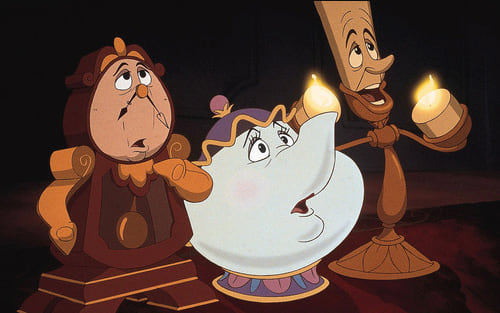
Not much of a hero at all really.
Another area which is much simplified for children is instructions and morals. Think about “Stop, look, listen”. Very simple instructions to follow. Not a “Stay alert” in sight. Kids are taught to be kind. Kids are taught to share. Kids are taught to always try their best. There are a fair few adults that would do well to remember these lessons too. But the absolute number one simple lesson from childhood – for my money at least – was “Do not lie”. It doesn’t get any easier than that; always tell the truth. Then something happens. I guess it varies from kid to kid. It could happen at almost any time. But at some point, your kid is going to say an embarrassing truth. It might be when out in public, with your child pointing at someone and saying something like, “Wow, look how fat they are.”. Or perhaps you’ll be having dinner round someone’s house, where your child will loudly proclaim, “This food is horrible.”. It’s around this point where most parents will feel compelled to teach their child about the concept of white lies. They will say that telling the truth can sometimes hurt someone’s feelings. In these circumstances, it’s ok to tell a little white lie. This is often a child’s first foray into grey area. Now, instead of a blanket “Never Lie” policy, they’re having to use their judgement on when it’s acceptable to tell the truth and when it’s not. It’s quite a lot to ask of a child I think. And then a little bit after this phase, children then start to figure out that characters such as Father Christmas don’t actually exist. They realise that their parents lied to them. Ah, but it must be ok to lie if it’s to make someone else happy. I’m sure a lot of kids took these new truth lessons in good faith and tried to apply them sensibly and fairly. But other kids (i.e. me) got the following message: it’s ok to lie as long as you can justify it. Of course, you can justify almost anything if you really want to. Imagine you got into a fight at school. It certainly wouldn’t make your parents happy to know you’ve been fighting. They’d be happy if they thought you’d had a good day at school, so I think I’ll tell them that I did have a good day. Hmm, maybe that isn’t quite justifiable. But, they might think me fighting is a poor reflection of them as parents and that would hurt their feelings. Best I tell them a little white lie… Obviously a pretty ridiculous example, but you get the idea. Thankfully, all kids grow out of lying and turn into paragons of truth as adults.
Right, I’m off to go read some tabloid newspapers, scroll through social media, and then I have to respond to a very important email. A Nigerian prince has been in contact and needs some help. Once done, I just need to send him some money to unlock the UK/Africa block scheme, and then he’s going to send me £10,000. I’m so lucky he picked me…
Thanks for joining me again this week guys. Stay safe, be well, keep fighting the good fight.
 A Rob Blog